
The dream of a car that drives itself while you sit back and answer emails is no longer confined to sci-fi movies. In 2026, autonomous driving technology has divided into two fiercely competitive camps, each backed by entirely different philosophies, engineering strategies, and legal frameworks.
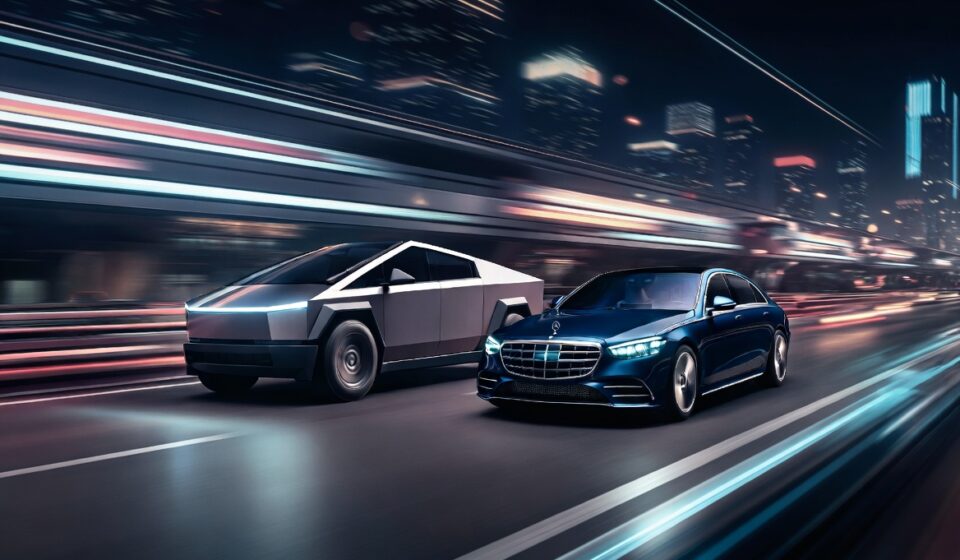
On one side is Tesla, betting everything on its end-to-end neural network and an “unsupervised” future. On the other side are traditional premium automakers like Mercedes-Benz and BMW, rolling out highly precise, geofenced Level 3 systems where the manufacturer legally takes blame for the drive.
If you are looking to buy a high-tech car this year, which system actually deserves your trust? Let’s break down the ultimate autonomous driving showdown of 2026.
Tesla FSD V12+: The Dynamic, “Drive Anywhere” Visionary
Tesla’s Full Self-Driving (Supervised) system relies entirely on Vision-Only technology (cameras) and “end-to-end” AI neural networks. Instead of engineers writing code for every traffic scenario, the car learns by watching millions of hours of real human driving video data.
- The Experience: Tesla’s latest FSD iterations feel incredibly human-like. It handles complex inner-city roundabouts, unprotected left turns, and sudden construction zones with impressive fluidity. It can engage almost anywhere, from rural country roads to crowded downtown lanes.
- The Catch: It is still strictly a Level 2 system (semi-autonomous). The driver’s eyes must remain on the road, and hands must be ready to take over instantly. Tesla tracks your attentiveness via cabin cameras, and too many distractions will lock you out of the system.
- Best For: Commuters who want a tech-forward assistant that can navigate almost any geographical location, provided they don’t mind staying alert.
Mercedes-Benz Drive Pilot & BMW Personal Pilot: The Legal Level 3 Luxury
Traditional European automakers are taking a slower, safer, but legally revolutionary approach called Level 3 Autonomous Driving.
- The Experience: When you engage Mercedes’ Drive Pilot or BMW’s Personal Pilot on designated highways, a paradigm shift occurs. You are legally no longer driving. You can check your phone, read a book, or watch a movie on the central infotainment screen. If the car crashes while the system is active, the automaker’s insurance—not yours—is legally liable.
- The Hardware: Unlike Tesla’s minimalist camera setup, these German systems are armed to the teeth with hardware: LiDAR sensors, long-range radar, ultra-precise HD mapping, and redundant braking/steering systems.
- The Limitations: It only works under very strict conditions. Currently, it is restricted to approved, pre-mapped highways, during daytime or clear weather, and typically at speeds capped between 40 to 60 mph (65–100 km/h) depending on local regulations. If it starts raining heavily, the car will beep and give you 10 seconds to take back control.
- Best For: Executive commuters who spend hours stuck in heavy highway traffic and want to legally reclaim that time for work or relaxation.
Side-by-Side Comparison: The Tech Clash
| Feature | Tesla FSD (Supervised) | Mercedes / BMW Level 3 |
| SAE Automation Level | Level 2 (Driver is responsible) | Level 3 (Car is responsible) |
| Sensor Philosophy | Pure Vision (Cameras Only) | LiDAR + Radar + Cameras + HD Maps |
| Operational Area | Virtually anywhere | Geofenced (Approved Highways Only) |
| Legal Liability | You | The Automaker |
| Best Scenario | Cross-country road trips & city streets | Heavy highway traffic jams |
The Verdict: Visionary Software vs. Bulletproof Hardware
The choice between these systems comes down to what you value more: freedom of geography or freedom of attention.
Tesla offers a system that can drive you from your suburban driveway to your downtown office block, but it requires your constant supervision. It is a highly capable co-pilot, but a co-pilot nonetheless.
Mercedes-Benz and BMW offer true autonomy, freeing your mind and eyes from the burden of driving, but only on specific stretches of asphalt under perfect conditions.
As we move deeper into 2026, the gap is narrowing. Regulatory approvals for Level 3 are expanding globally, while Tesla continues to train its AI models at an unprecedented scale. One thing is certain: the way we view our daily commute has changed forever.
Which approach do you trust more for the future of autonomy: Tesla’s pure vision AI or the German automakers’ LiDAR-backed legal guarantee? Drop your thoughts in the comments below!